Most musicians think being ready for the stage means mastering their instrument. They chase speed, polish licks, and obsess over technique. I know, because I was one of them.
I often think about the guitarist who can sweep pick like a machine but can’t hold down a simple groove, or the drummer who can blast at warp speed but falls apart when a metronome enters the room. They focus so hard on one thing that they forget what it really takes to get the gig, keep the gig, and earn their place on the stage.
There’s a fantasy that once you finally step onto a big stage, something inside you will click. You’ll suddenly know how to move, how to perform, how to command a crowd. That isn’t how it works.
This article comes from an old road dog, someone who lived through the glory days of the circuit and has spent the last decade on the other side of the stage as a venue owner and talent buyer. I’ve watched the scene shift in all kinds of ways, some good, some not so great. But one thing hasn’t changed. If you want to make fans, you need a core skill: knowing how to perform on stage. I don’t expect the wild chaos of the eighties rock era to come crashing back, but I do think the art of performing has taken a real hit somewhere along the line, and I think it’s part of why live music attendance has declined. Folks don’t go out just to hear music. They go to be entertained. If bands don’t know how to work the stage, the lackluster performance affects the entire ecosystem.
The Mirror Lie
When I was a kid, I practiced rock star moves in the mirror. I had the stance, the head tilt, the I’m about to melt your face look. But when I walked onto my first real stage, I locked up. I didn’t move, didn’t smile, didn’t even look at the crowd. I glued my eyes to the fretboard like it owed me money.
I see bands today doing the exact same thing. Young players, older players, even musicians with years of experience. I don’t know why. Did I miss the memo that said crowds don’t care? If so, that’s exactly the point. We want them to care.
If I could go back, I’d tell that kid to focus less on the air guitar in the mirror and actually rehearse those moves with the band. Over and over. I was focused on talent, and talent is only one ingredient. If we’re being honest, it’s not even the most important one. Song choice, performance, professionalism, connection. Those matter more.
I put a lot of time into trying to be the kid who could shred instead of the kid who could perform, and it took me about a year to climb out of that hole. It also took my sister being brutally honest about my stage presence. Thanks, Sis.
Bedroom Legends vs. Stage Masters
Today you can scroll through endless clips of players shredding in their bedrooms. Perfect tone, perfect edits, perfect lighting. Many of them aren’t even teenagers yet. They sound great, but most of them couldn’t survive a real stage. Playing for a camera is safe. Playing for people is a different sport that requires a different skill set.
Crowds don’t care about your technique. Musicians do. Crowds care about your energy.
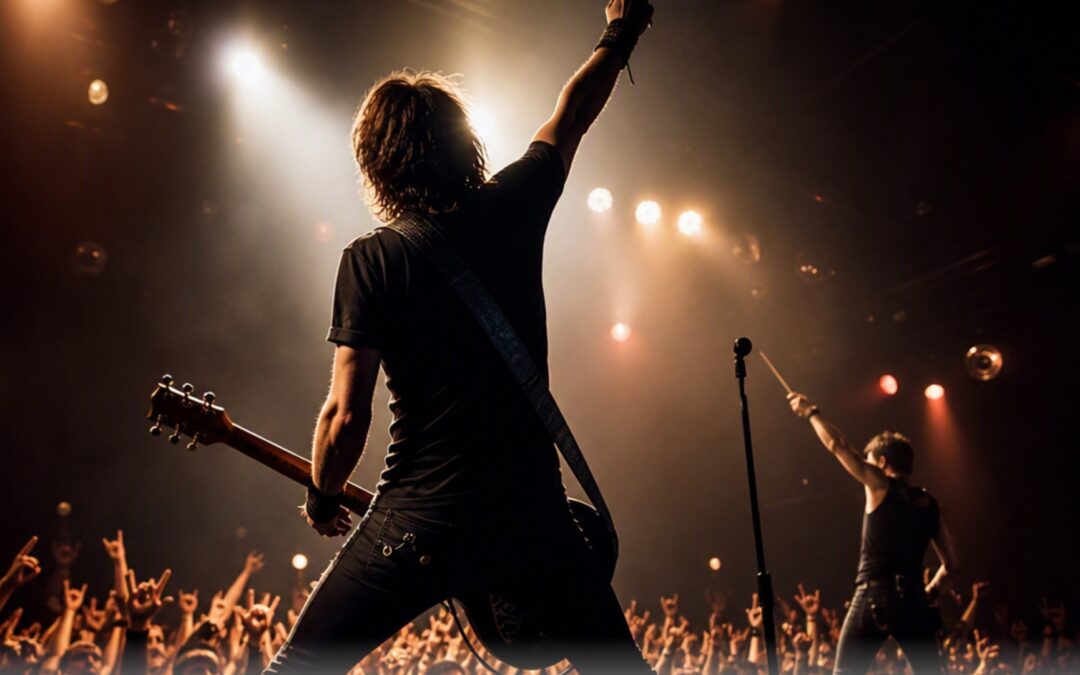
They watch your face, your movement, your attitude. They want to see someone having fun. A wrong note played with confidence, tongue out, eyes forward, leaning into the moment will hit harder than a flawless arpeggio nobody hears because your mids are buried.
The Flat 5 Experiment
Around 1991, I decided to test this idea. One night on tour, I played a flat 5 over and over. It was nasty. Really nasty. I wasn’t trying to be clever. I wanted to see what happened if I sold it with everything I had. I leaned into the crowd, hand in the air, looking directly at them, and played like the note itself was a celebration.
The crowd went wild.
Not because of the note. Because of the presentation.
That’s when it clicked. Stage presence isn’t optional. It’s a skill, and you have to rehearse it. From that point forward, I made the decision to work less on technique and more on performance. People hear with their eyes.
It was a good time back then. Skinny, long hair, throwing the guitar around my neck and jumping off drum risers. Today I’m older and fatter, which limits me to the occasional smile, raised hand, lifting the guitar, and trying not to break a hip. The main thing is having fun and translating that to the crowd. Here’s a video if you want to see what this old guitar player looks like trying his best to entertain.
Why Angus and Slash Actually Win
People love to argue about who’s better. They’ll throw out names of players who live online, edit every note, and never set foot on a stage. Some of those players are phenomenal. But think about Angus Young. Think about Slash. They’re not the fastest, and they’re not chasing technical perfection. Yet every solo feels like a moment. Every move burns into memory. They don’t just play. They perform. Both have that rare, electric stage presence that turns a show into an real experience. Same for Metallica or even Green Day. Maybe that’s why they play arenas and everyone else is on YouTube. Maybe it’s just me but I could not imagine seeing any of those bands just standing there. It’s all about the stage energy.
Bottom Line
Whether you’re in your bedroom, your garage, or already gigging, practice how you play live. Your performance matters. Not just the notes but the movement, the presence, the connection.
You won’t magically figure it out once you reach a big stage. You earn the big stage by owning the small ones, every single gig.
Rock on. Ready to see you on the big stage!